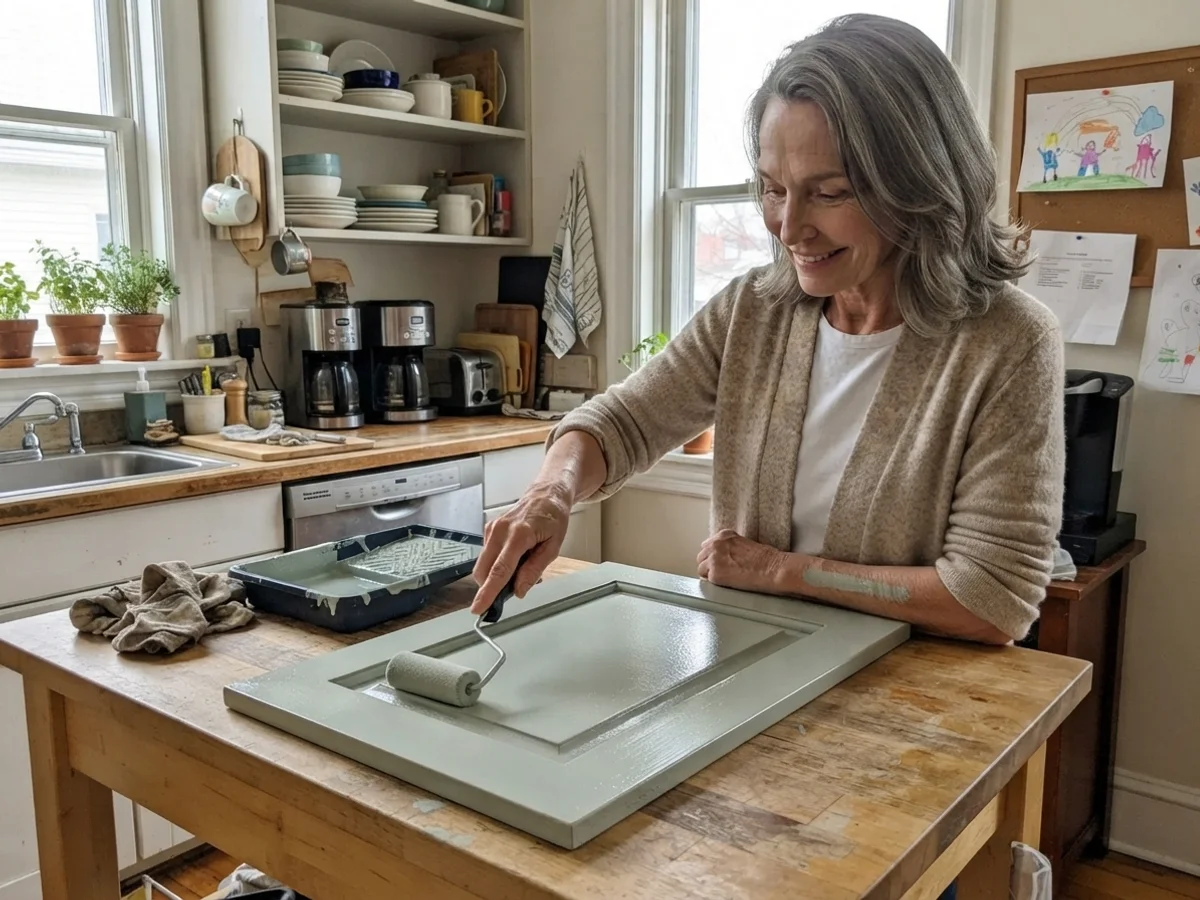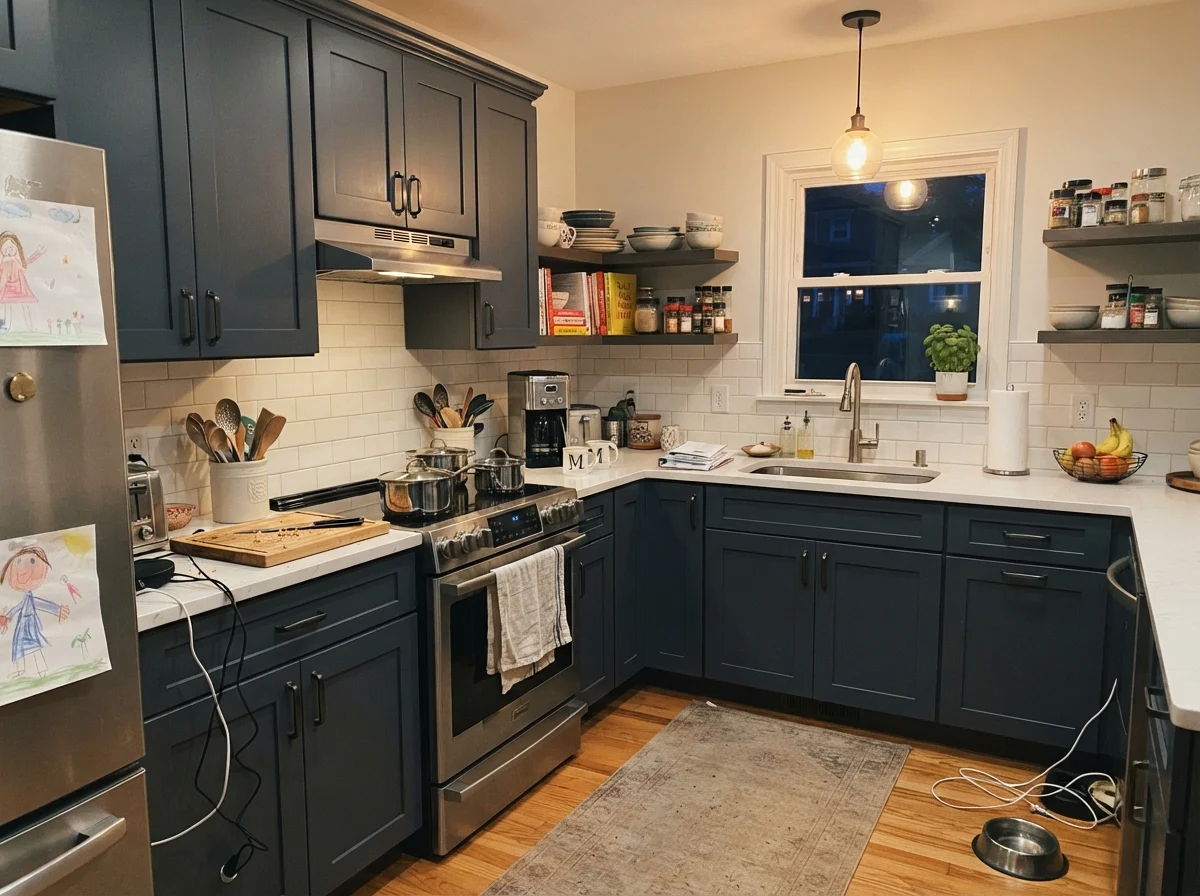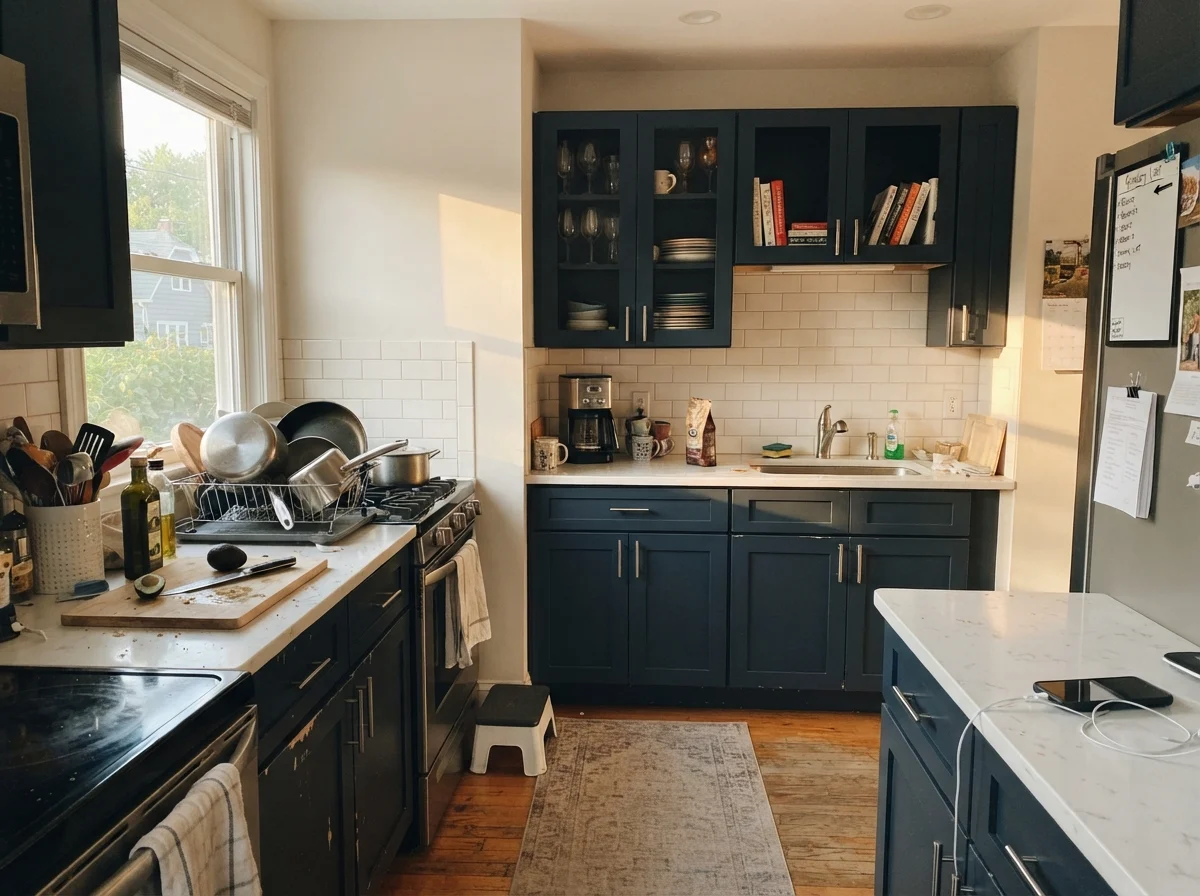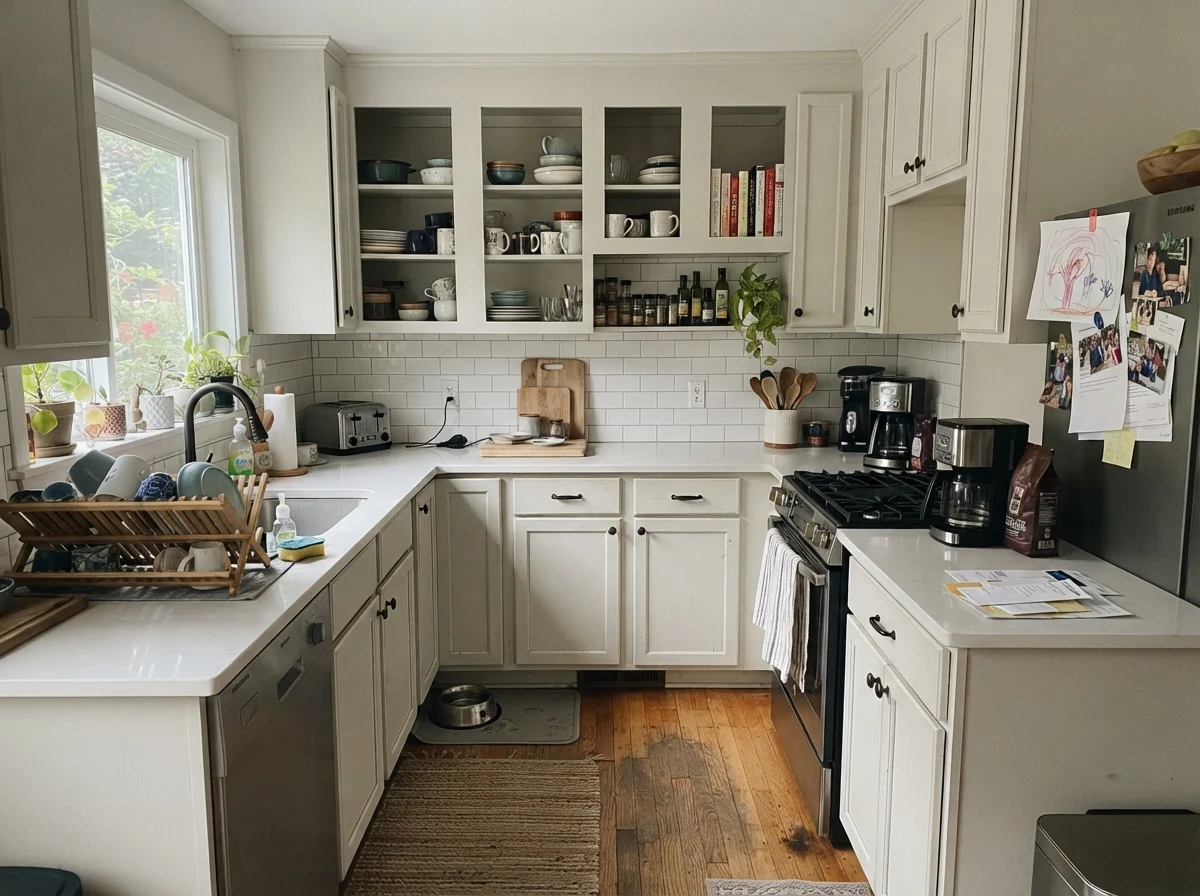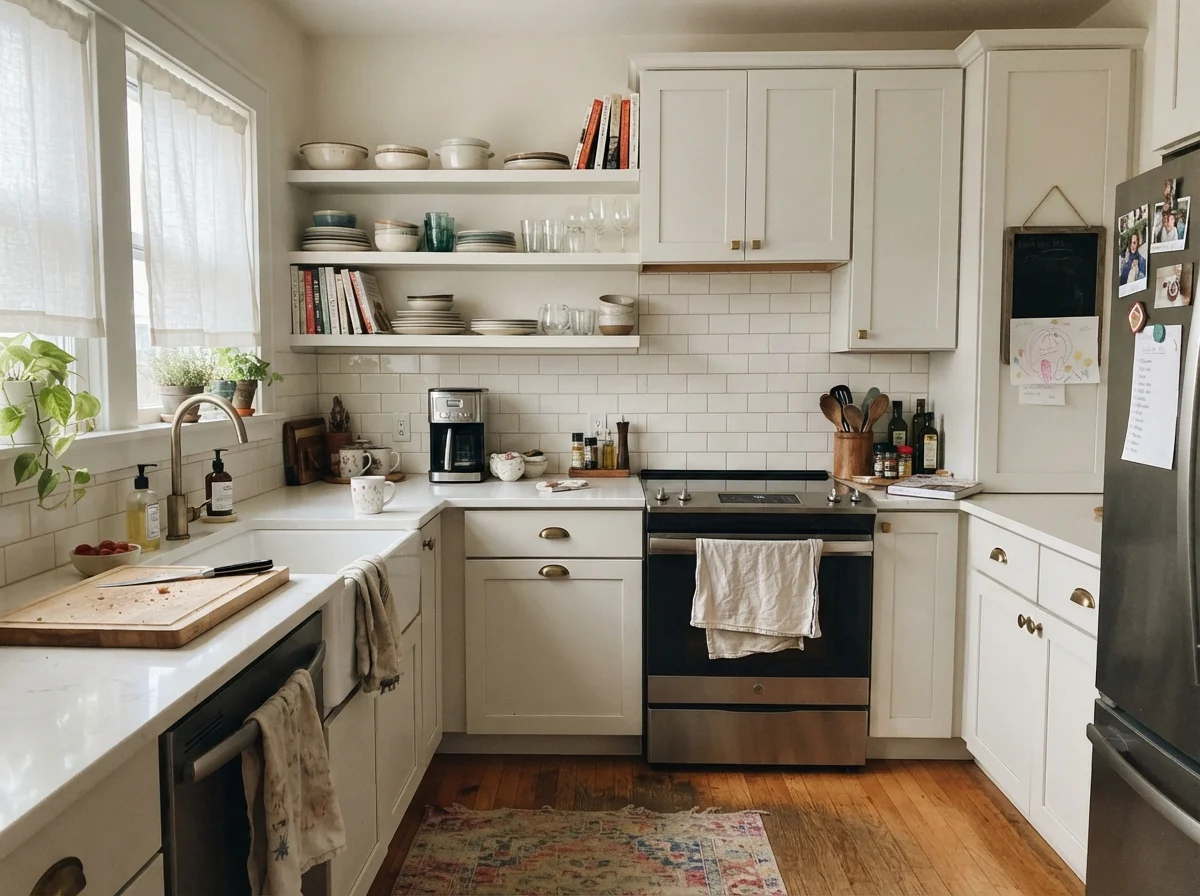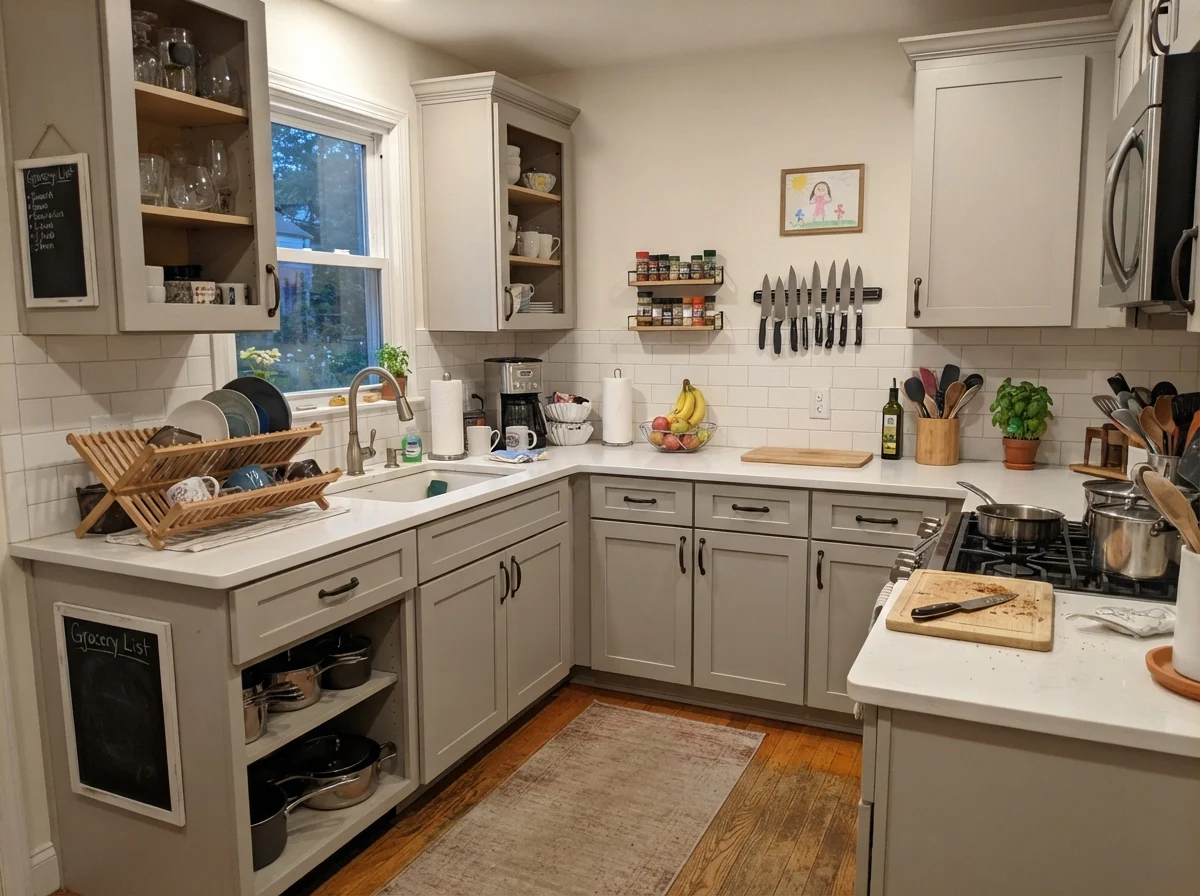
In our 1970s split-level, the kitchen cabinets were heavy honey oak with deep routed grooves that caught every speck of bacon grease. When we finally decided to paint them in 1994, I bought three gallons of off-the-shelf latex semi-gloss, slapped it directly over the old varnish with a cheap brush, and felt enormously proud of myself for about four weeks. By month six, the paint was peeling away in sticky sheets around the dishwasher handle, and the grain bled through looking like dirty watermarks. I had to strip every door down to raw timber in the middle of November with the garage door cracked.
That disastrous weekend taught me the golden rule of kitchen cabinets: they are not walls. A kitchen cabinet is furniture that takes mechanical abuse three hundred and sixty-five days a year. It gets kicked by toddlers, splashed with spaghetti sauce, wiped down with hot soapy sponges, and baked by afternoon sun through the sink window. The color you put on these boxes dictates how the entire main floor feels, but more importantly, how much time you will spend cursing your sponge when scrub marks start showing.
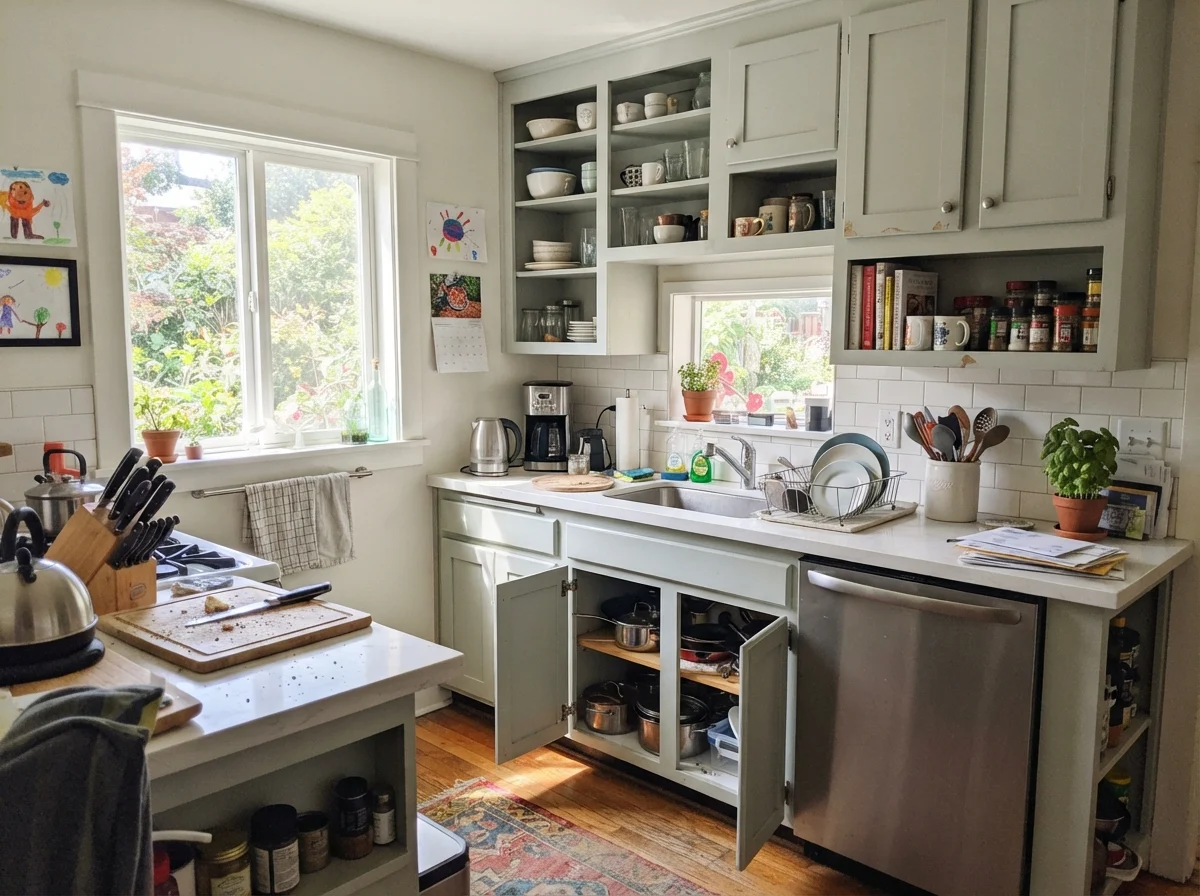
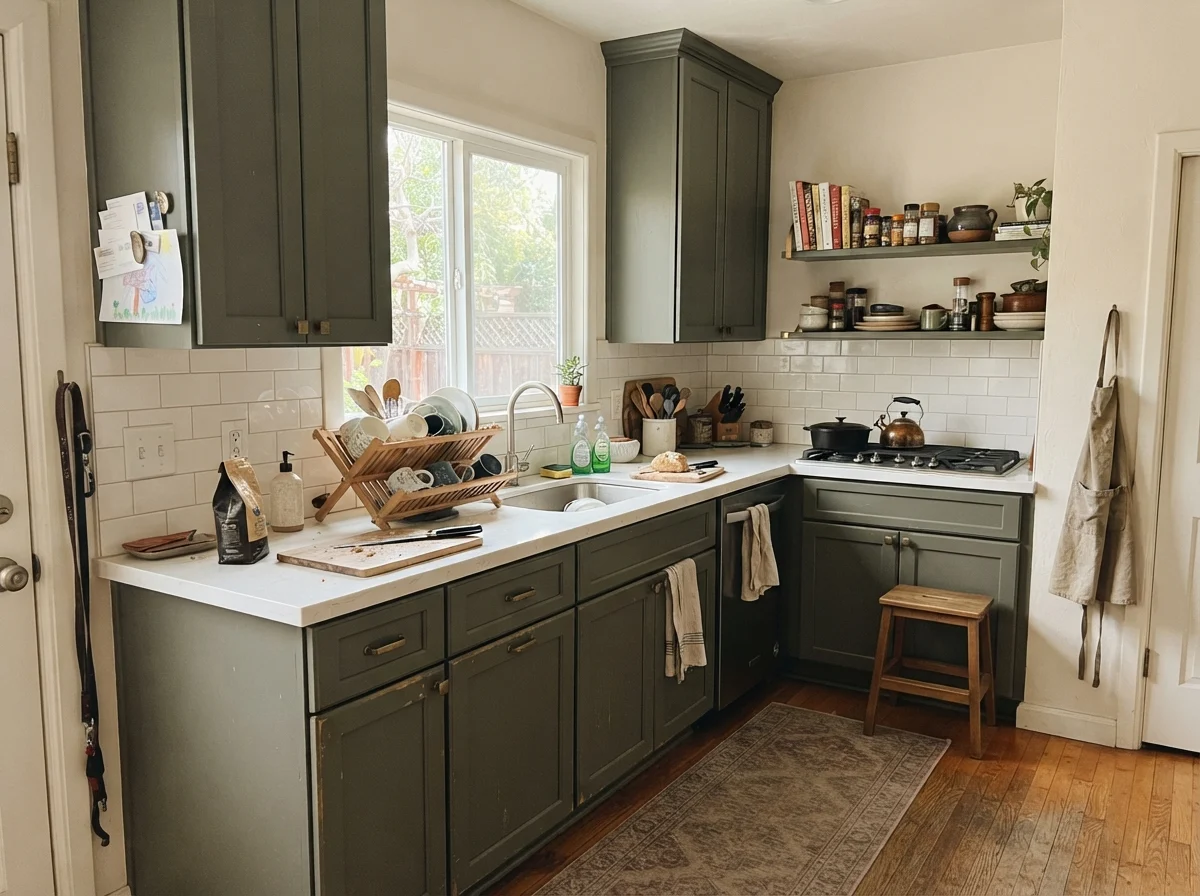
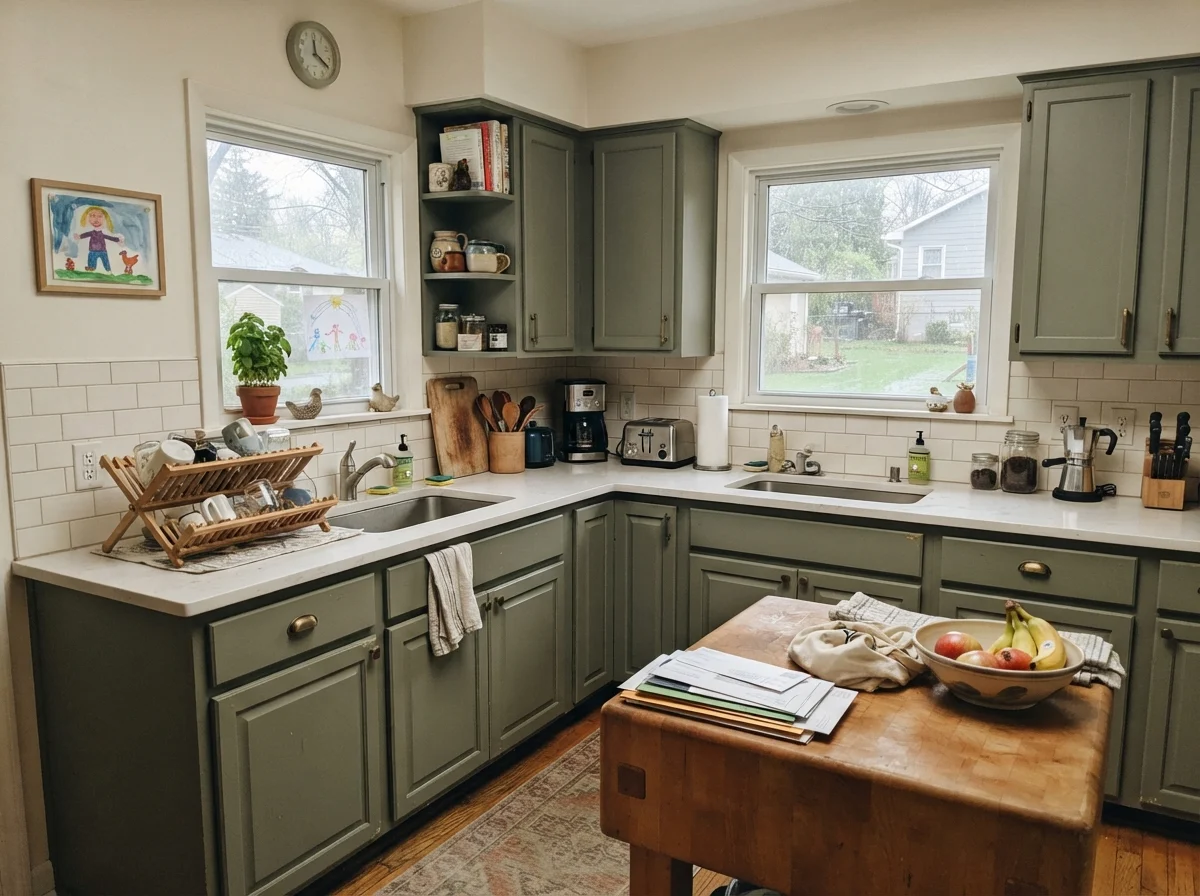
In our 1990s colonial, we painted the lower cabinets a deep hunter green that I loved for two years, tolerated for five, and repainted right before we listed the house because it turned the cooking area into a cave on winter mornings. Now, in our 1960s ranch, I look at color samples with a much harder eye. I do not care what looks moody in a glossy magazine shoot staged with studio lighting. I care about whether that door profile will still look clean when my grandchildren run their peanut-butter fingers along the lower edge.
Over thirty years and three homes, I have tested nearly every major color direction on kitchen cabinets. If you are preparing to pull the doors off their hinges, label every hinge screw, and commit your kitchen to two weeks of drop cloths, you deserve to know how these shades actually behave once the painter's tape comes down.